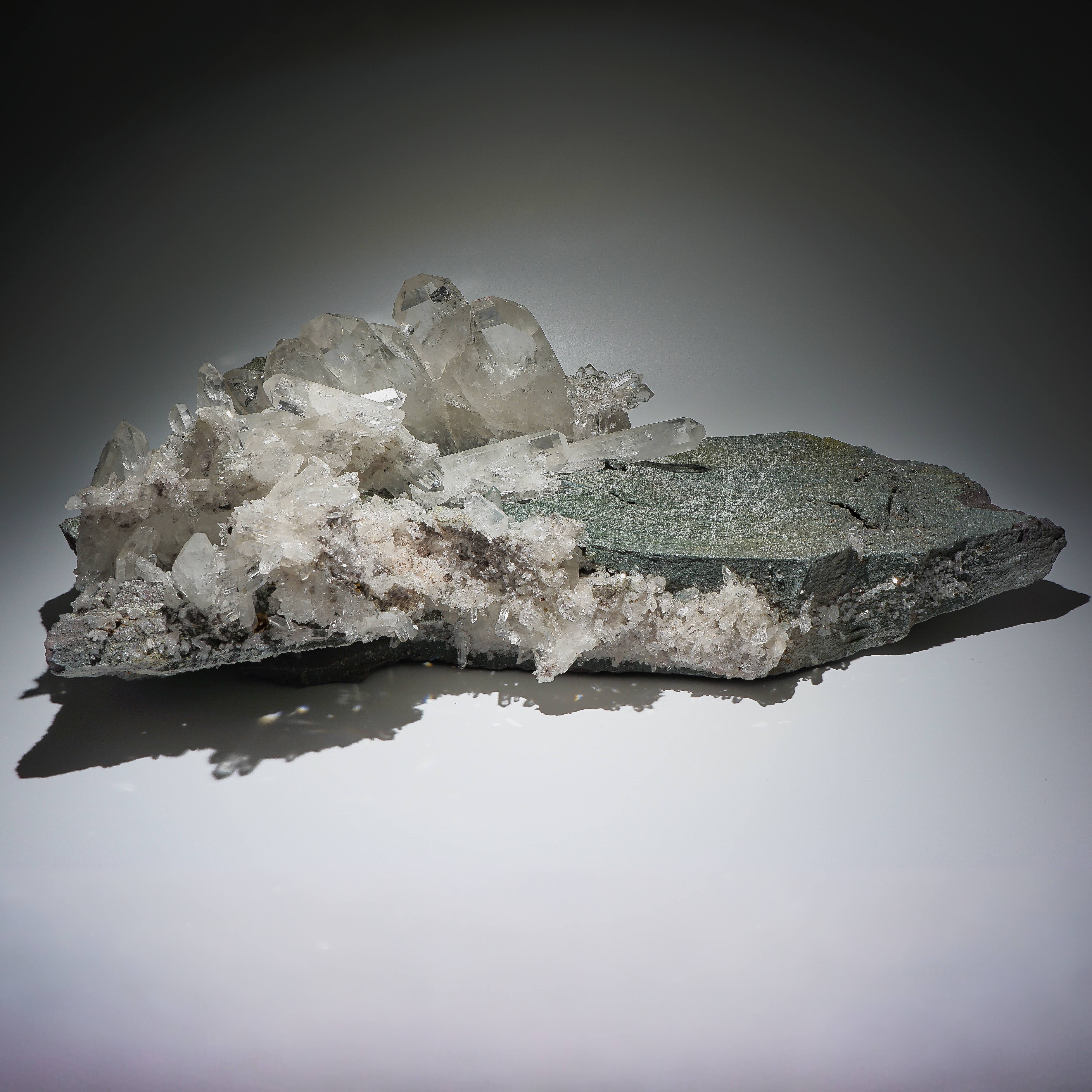
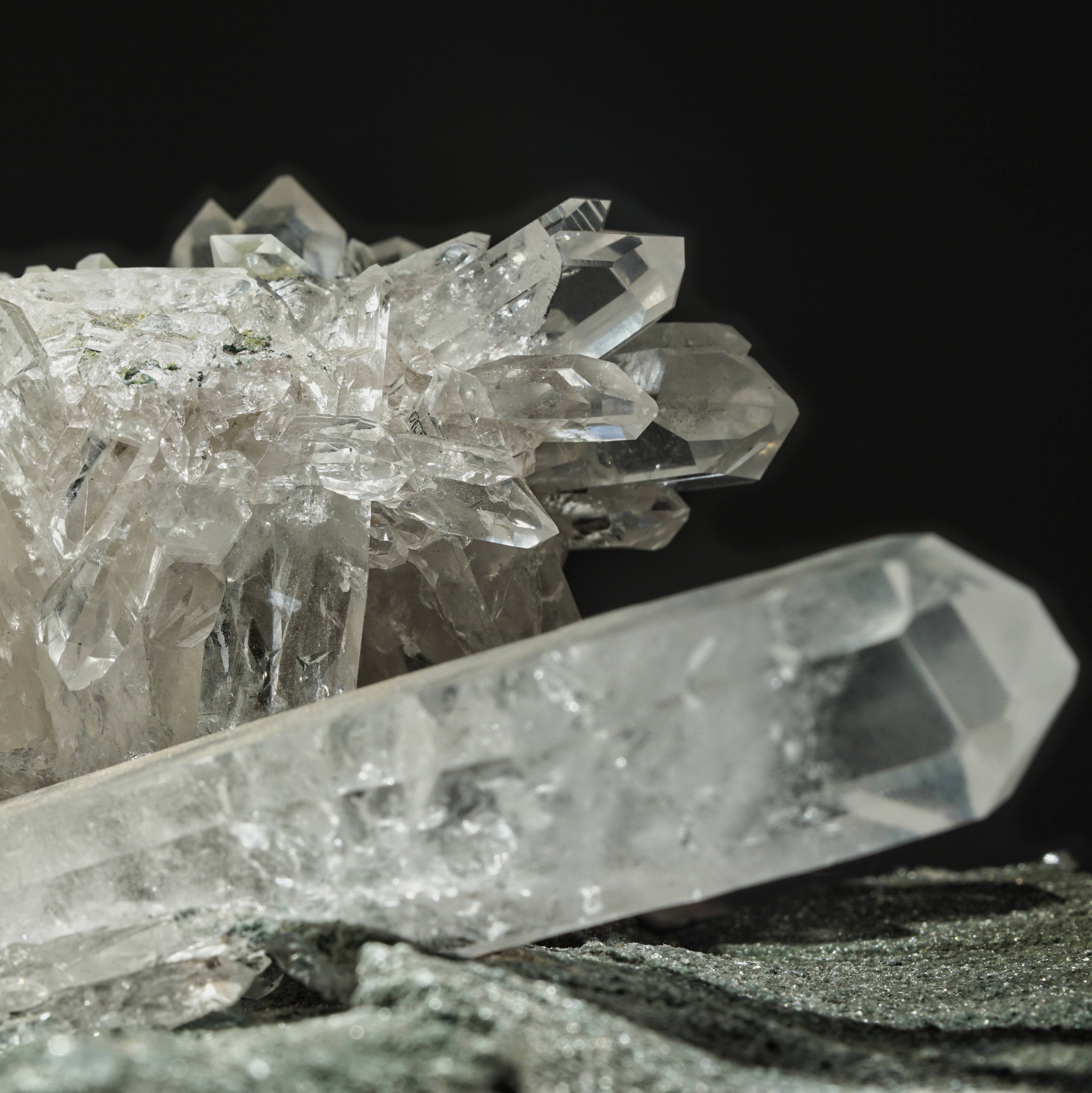
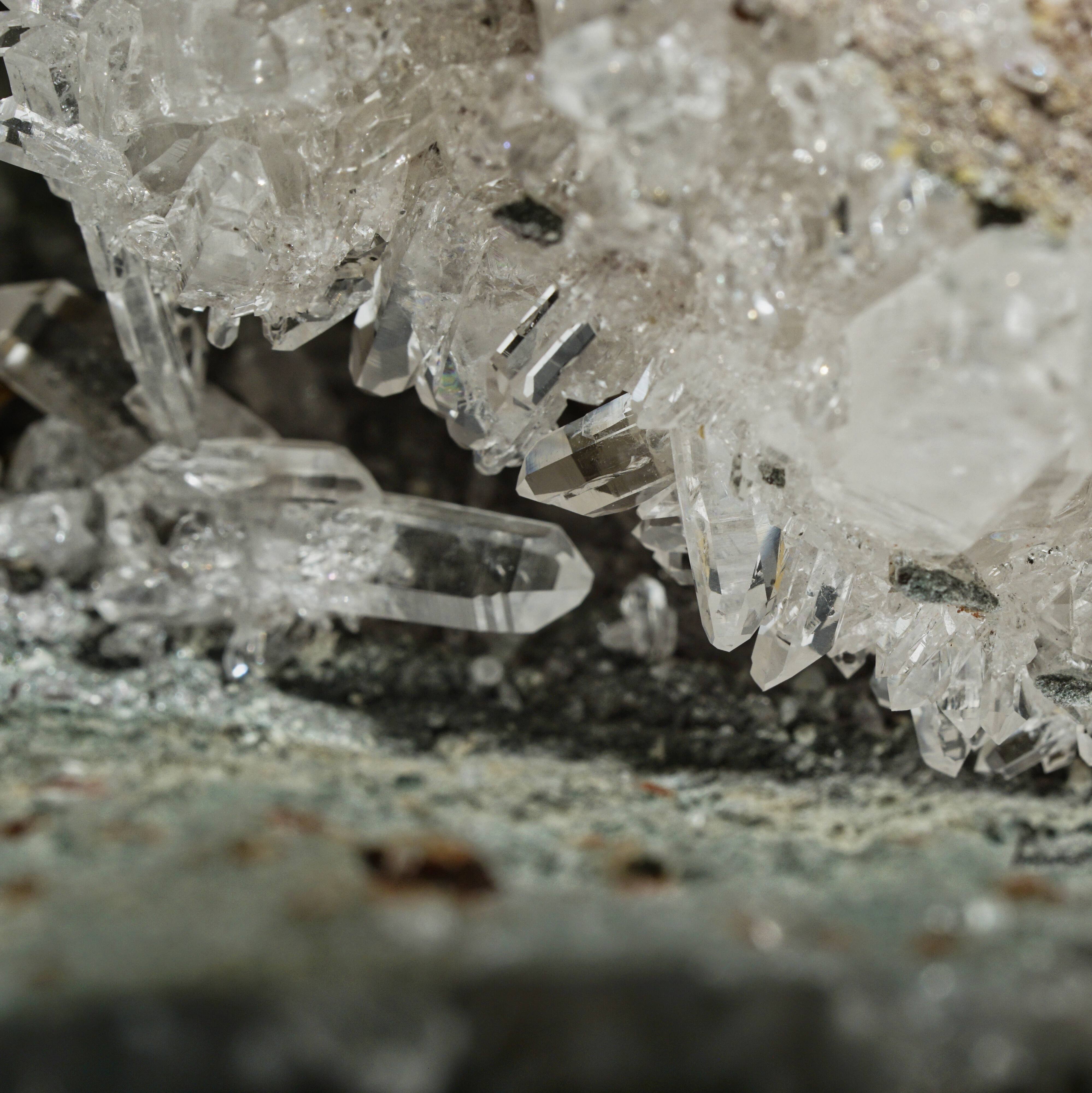
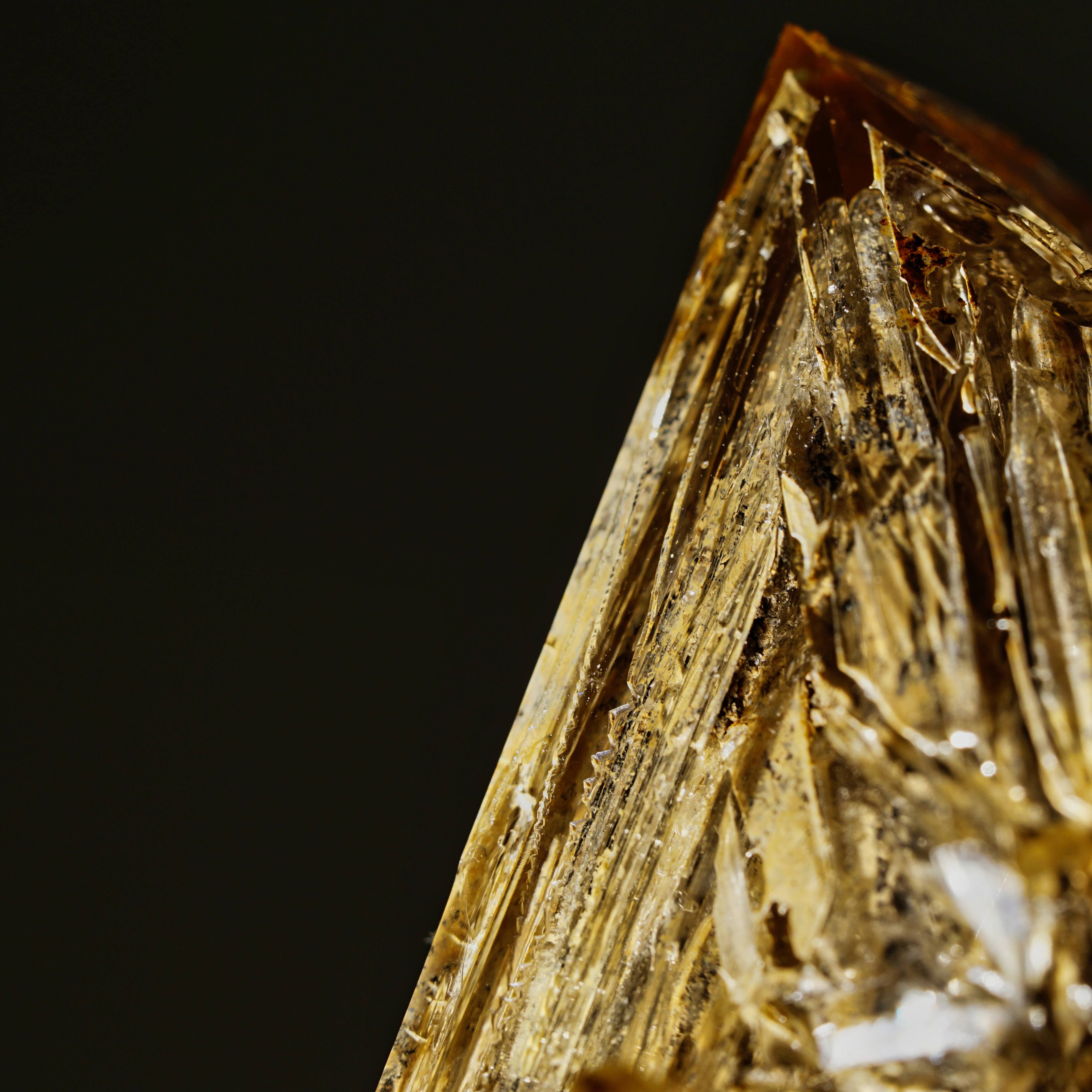
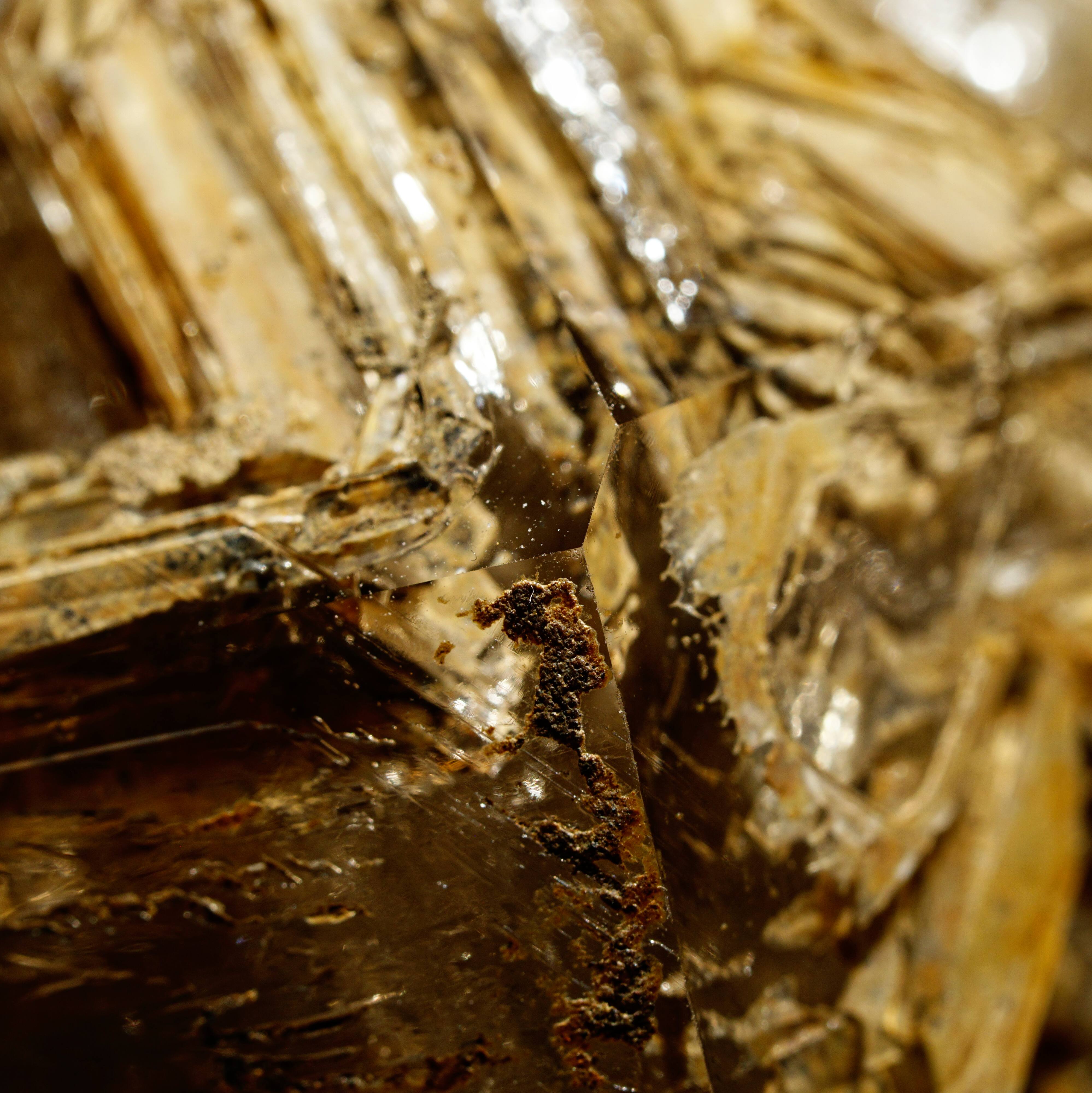
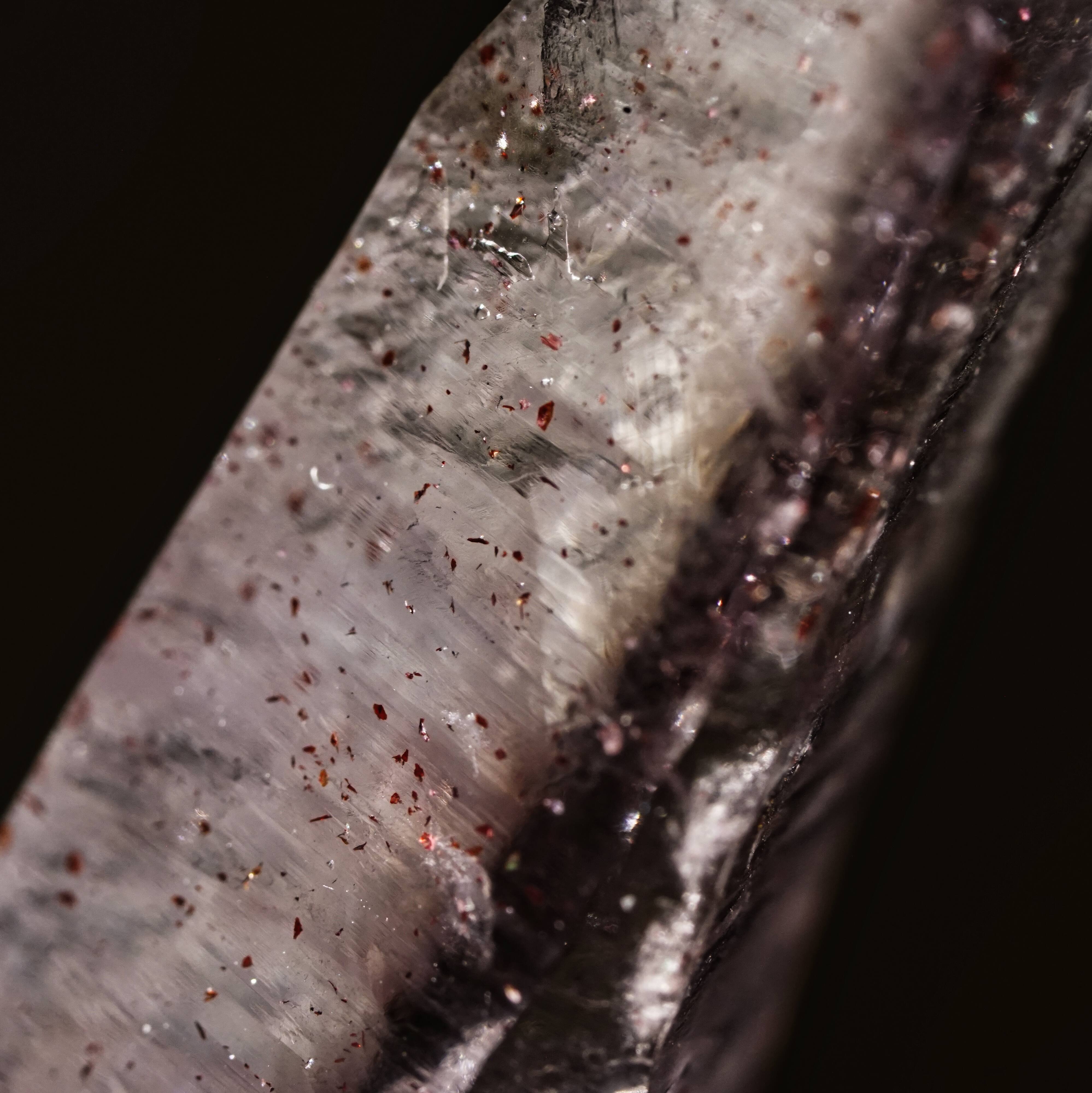
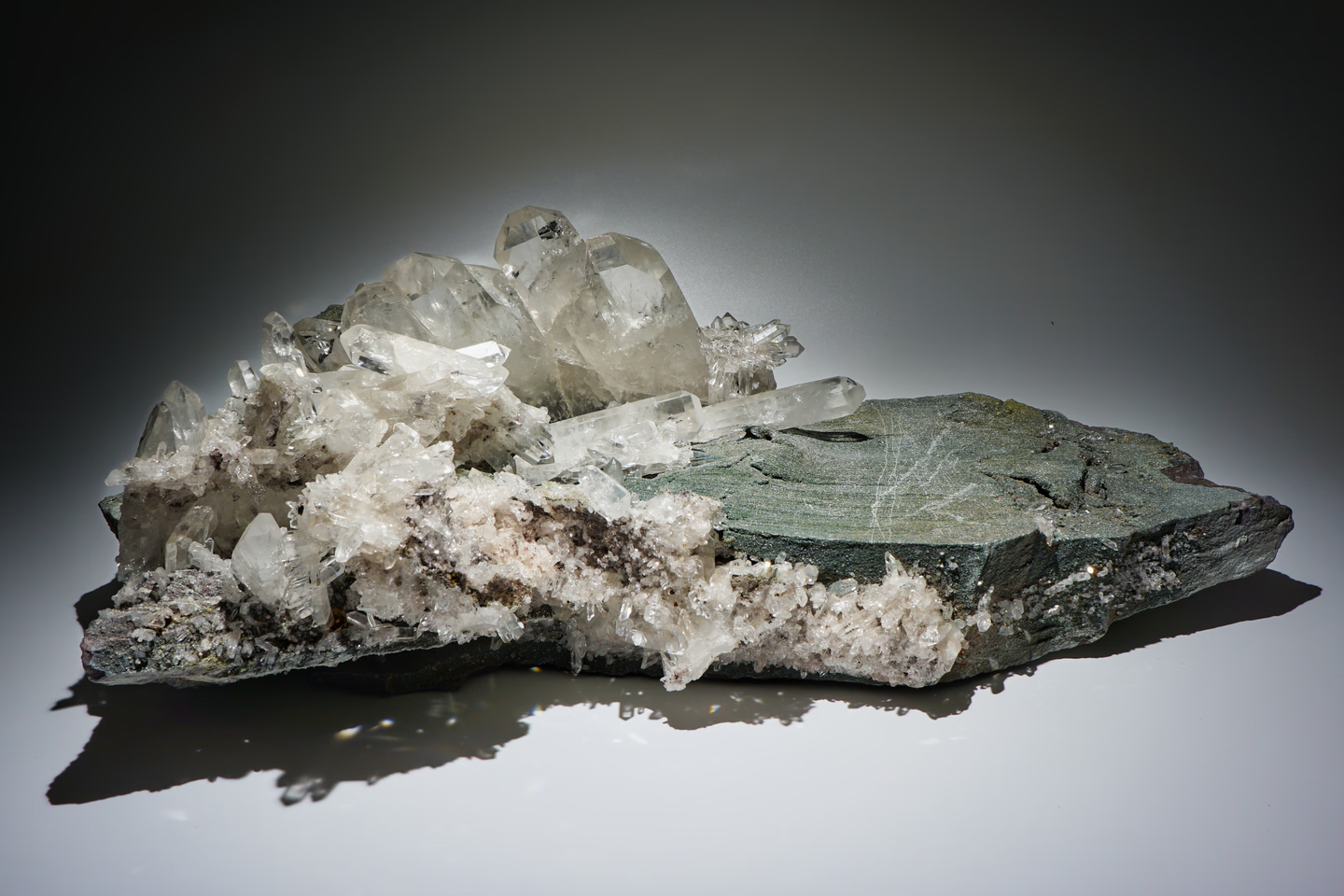
Faden Quartz is formed as fractures within the host rock slowly widen and heal, leaving a linear inclusion — the faden — that marks repeated rupture and regrowth. This internal thread records stress, movement, and repair within the crystal.
In this specimen, the faden aligns along a clear axis, while clustered terminations rise from a dense base, creating a silhouette reminiscent of a spacecraft in launch configuration. The structure feels directional and purposeful, with mass concentrated below and clarity projecting forward.
Selected for the Star Wars Collection, this Faden Quartz stands as a mineral expression of propulsion, precision, and controlled power.
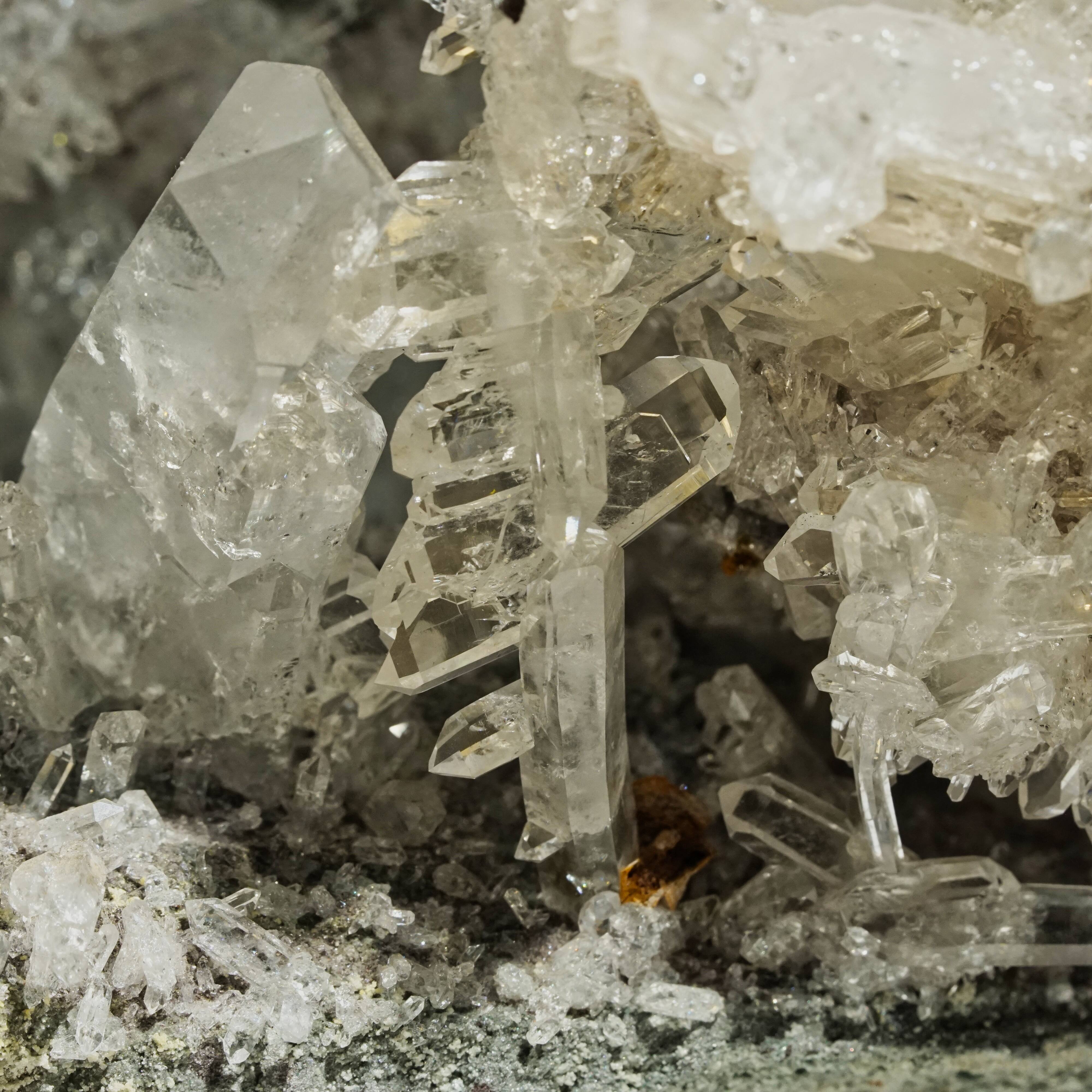
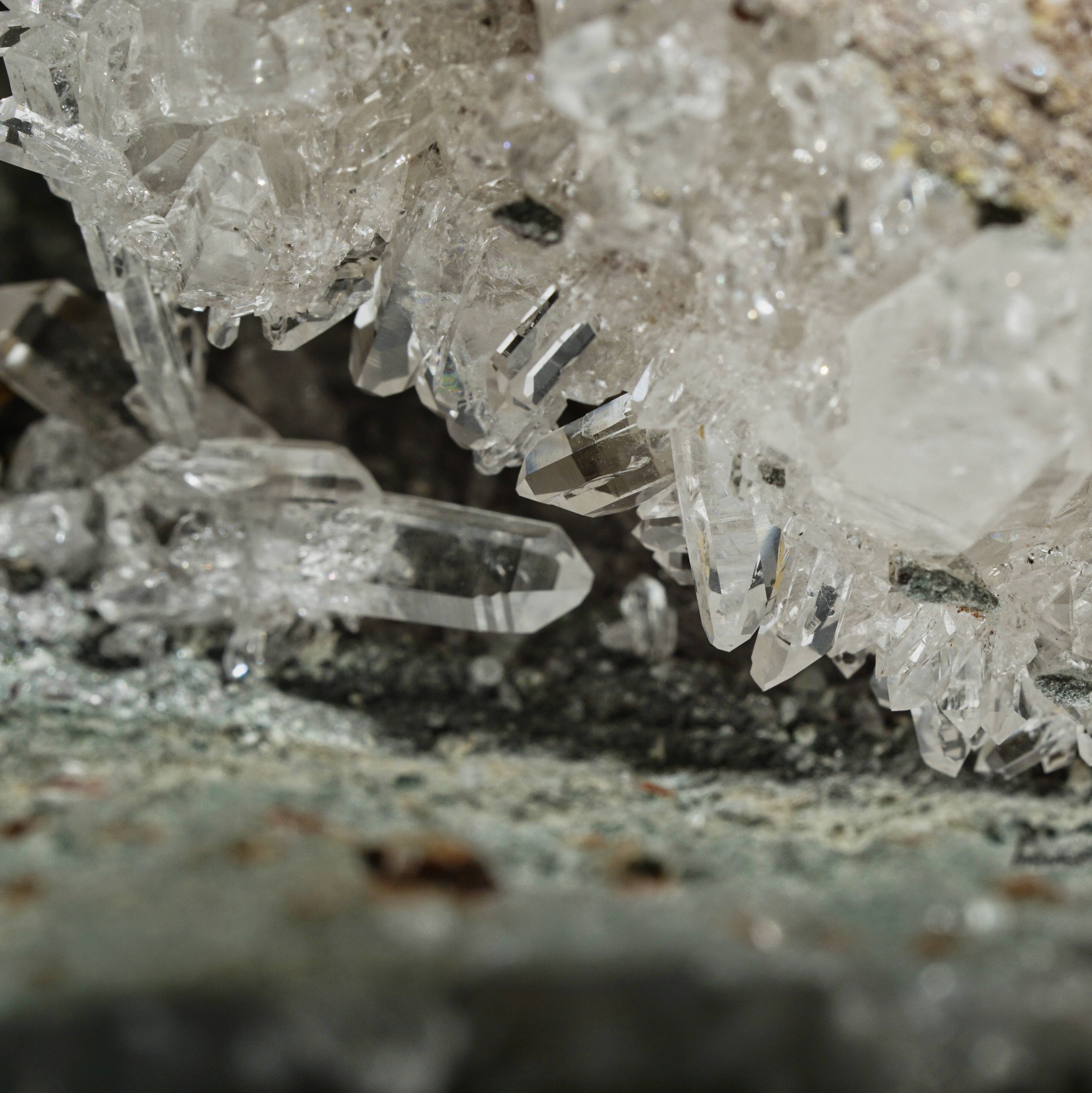
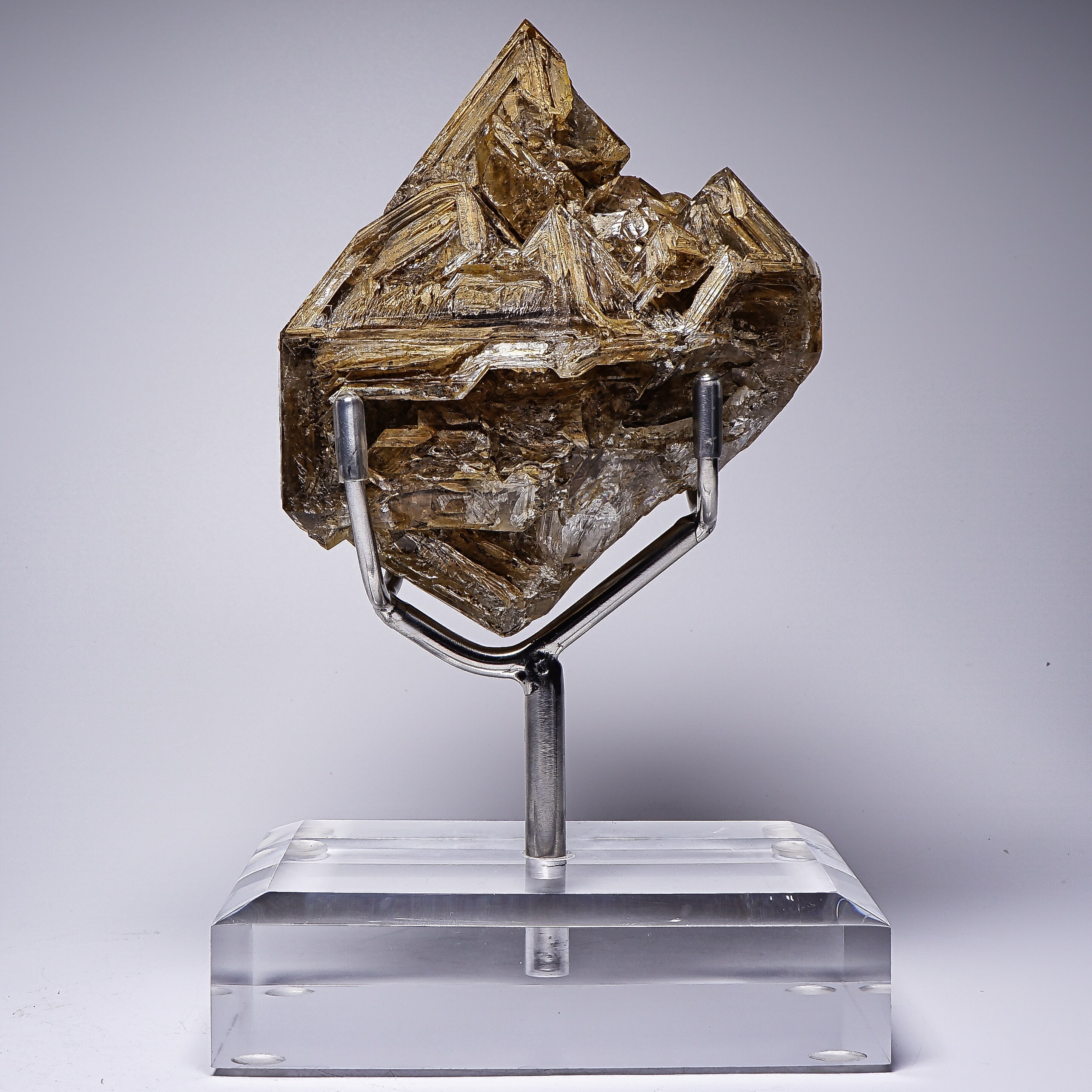
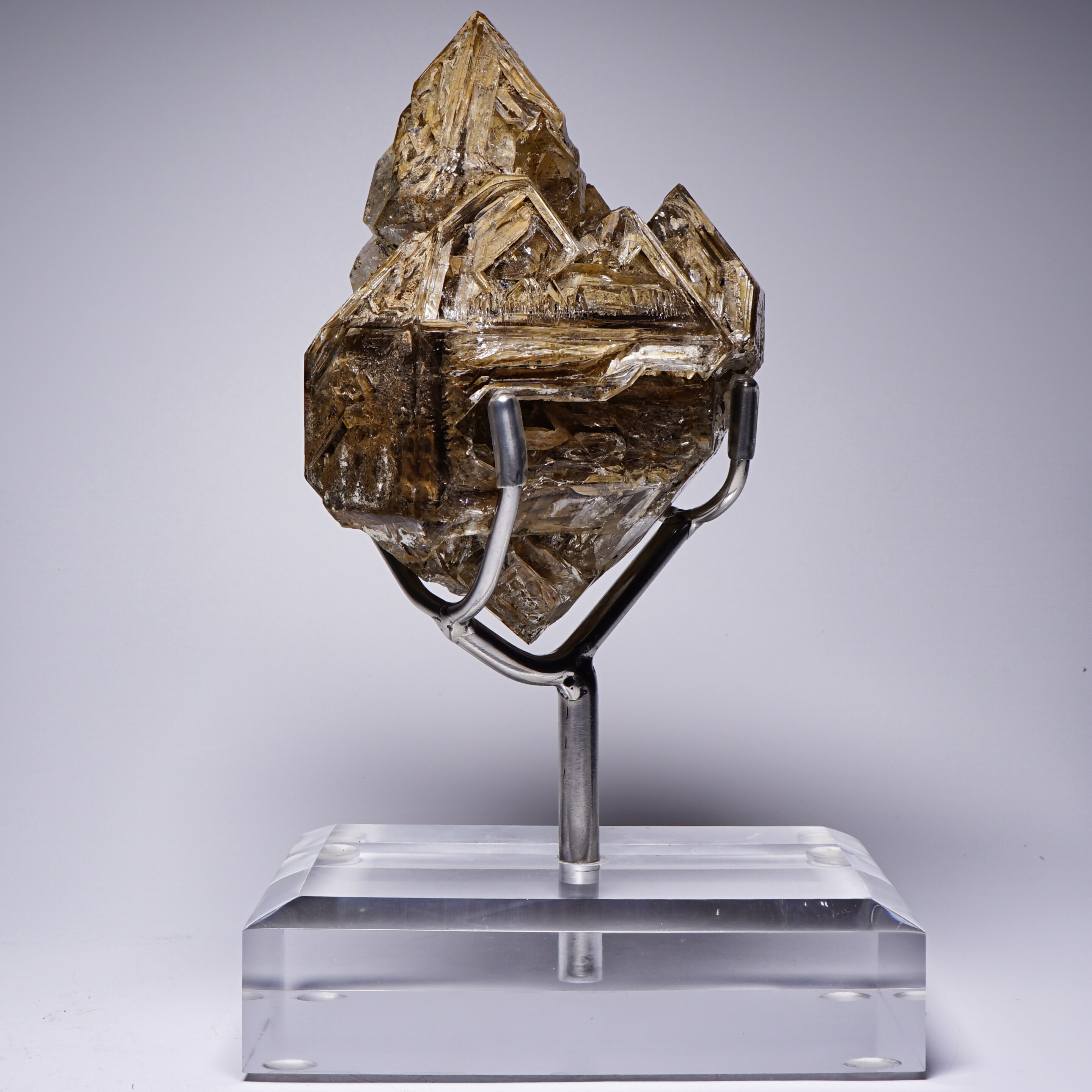
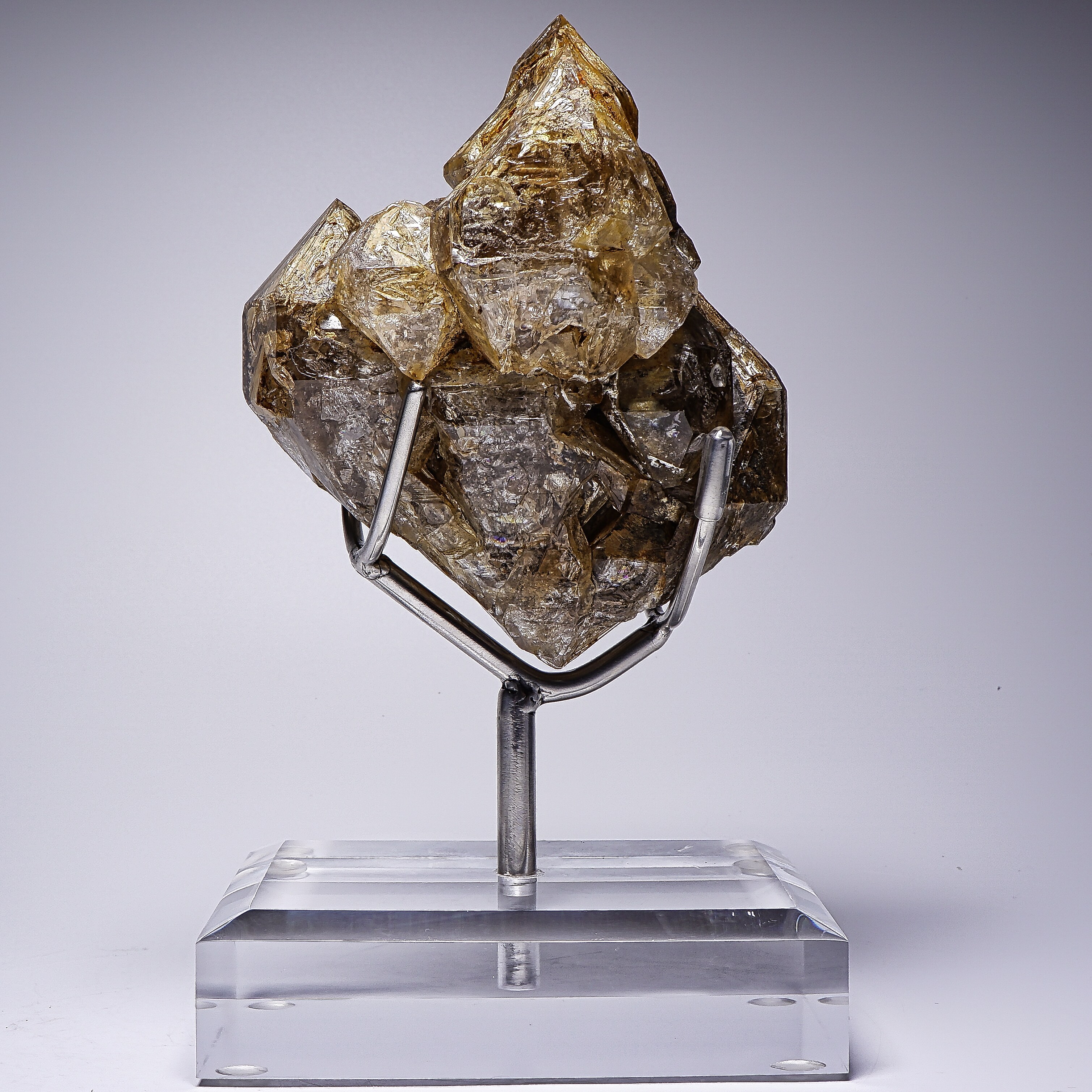
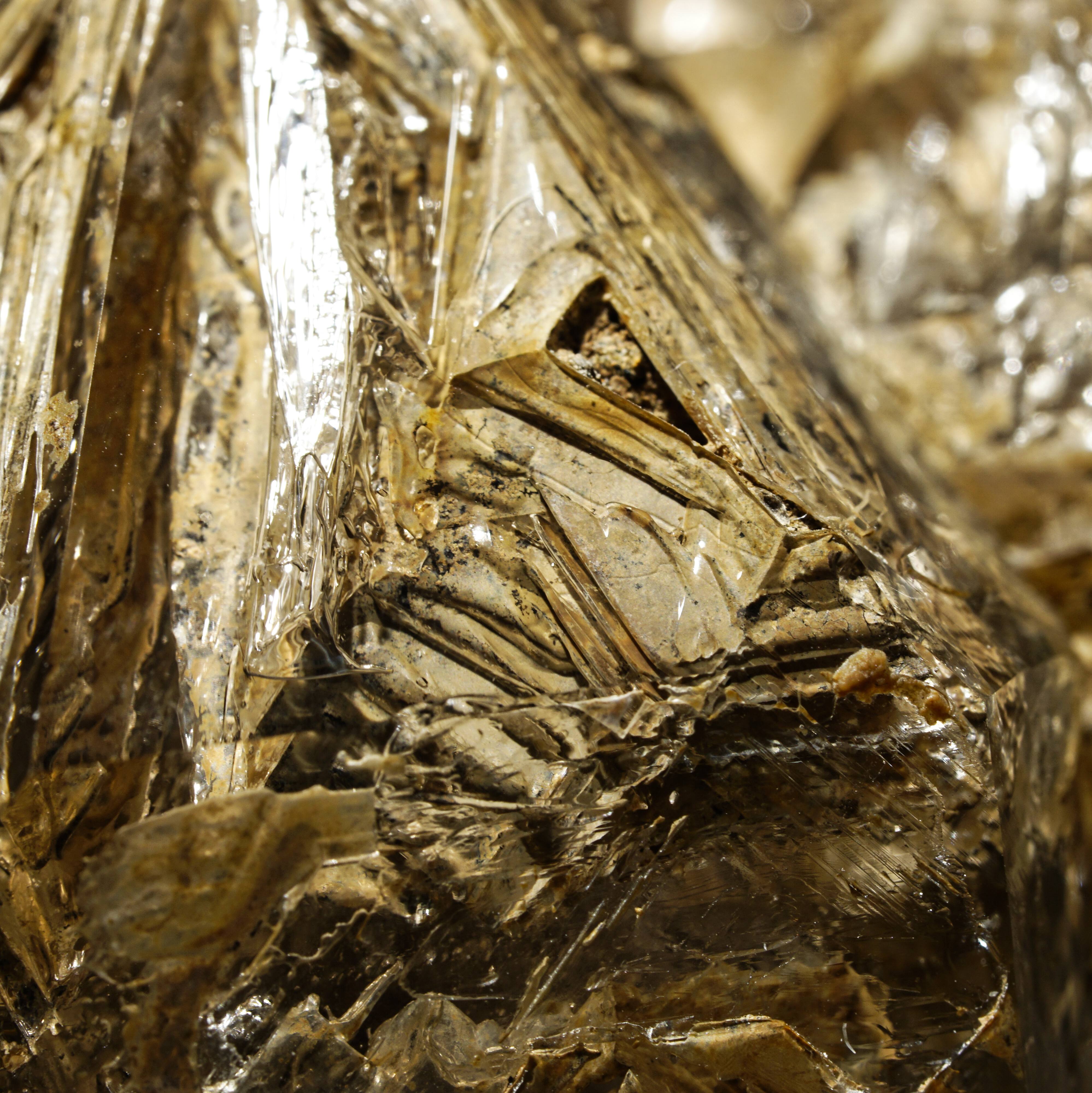
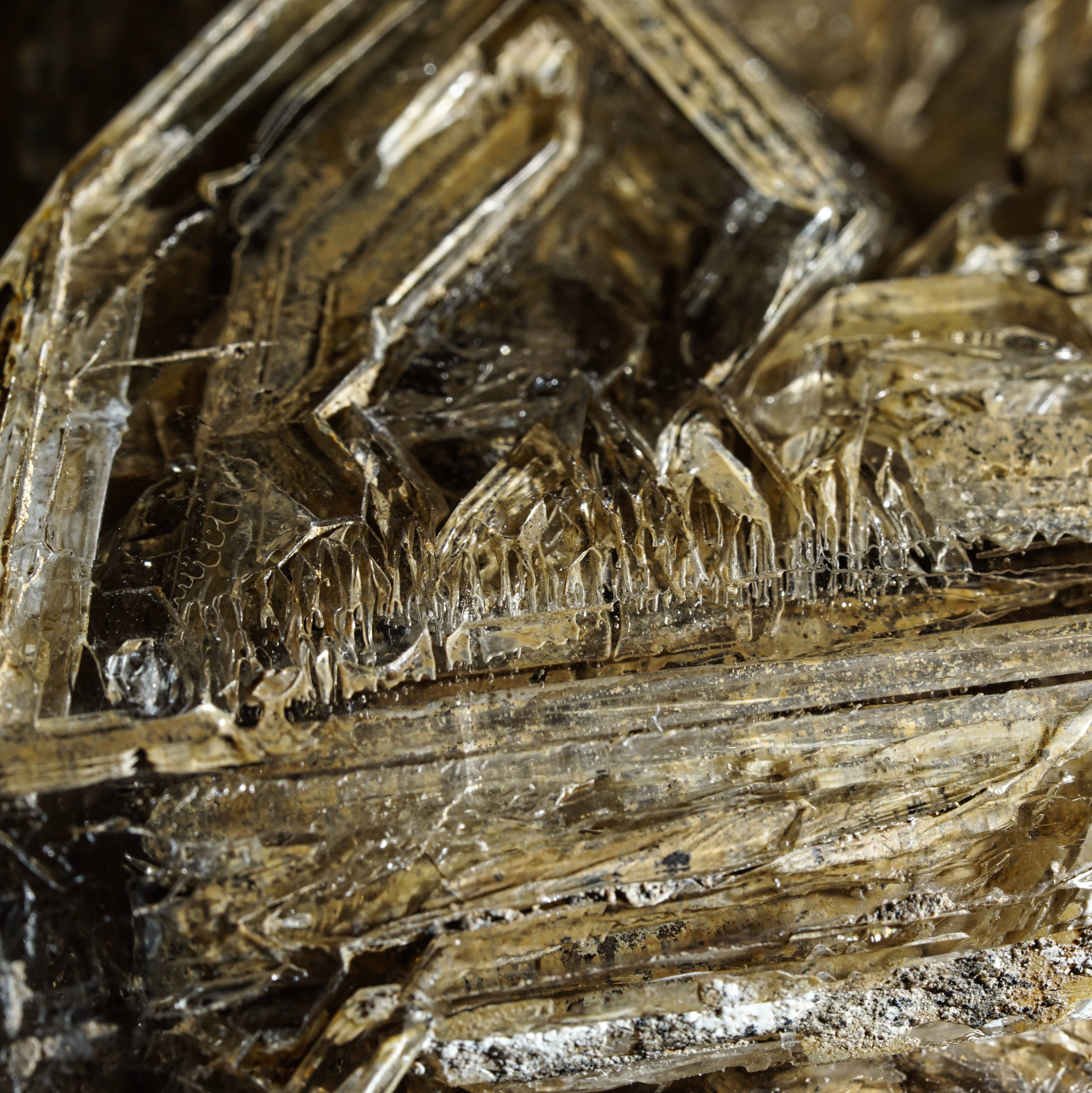
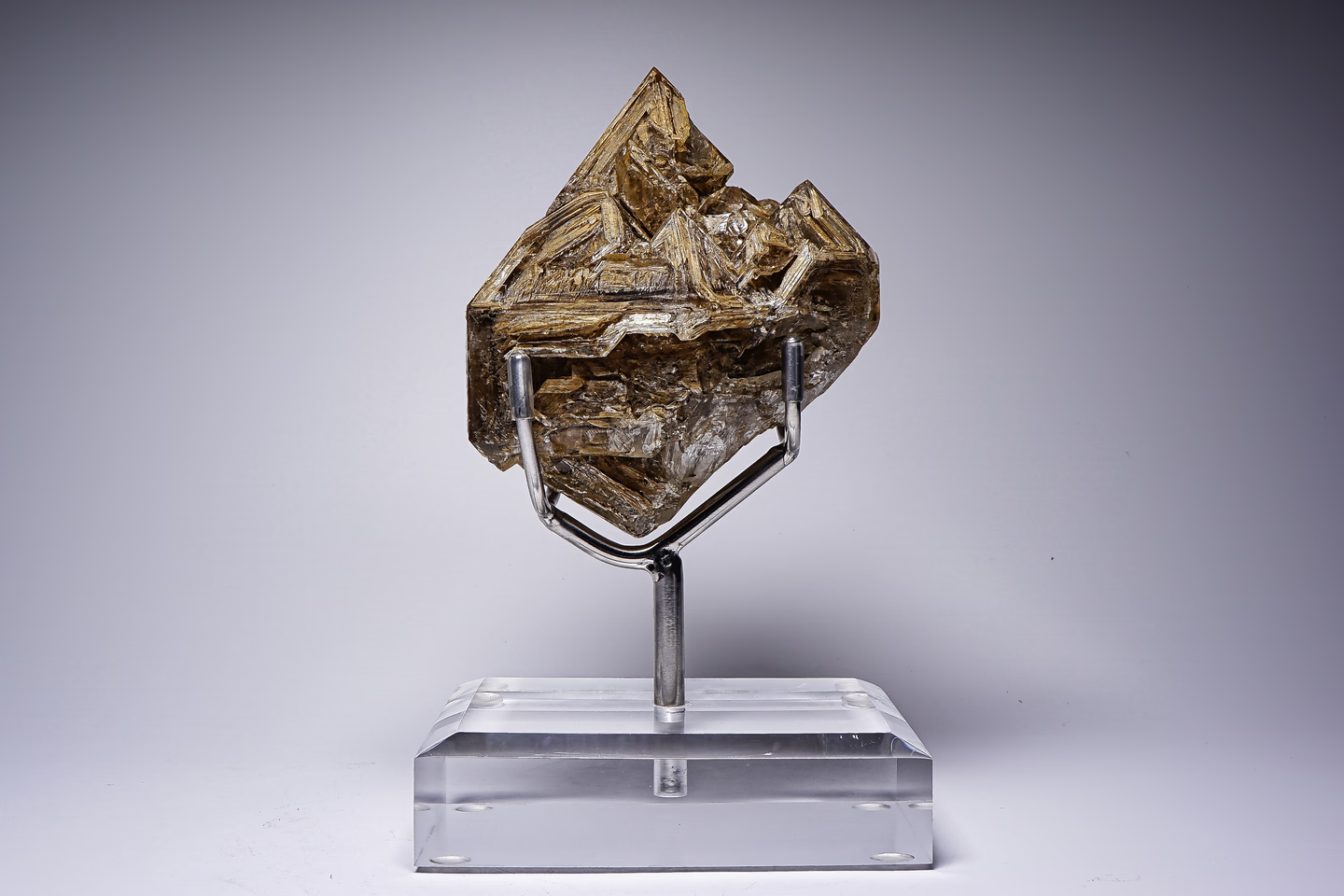
Skeleton Quartz forms through repeated cycles of rapid edge growth and surface interruption, leaving open frameworks and layered internal voids. Mineral-rich sediment becomes trapped between growth phases, creating stratified interiors marked by yellow and earthy inclusions.
In this specimen, the crystal appears built in layers, like pages bound together over time. Each stratum records a pause, a shift, a return — lines and planes stacking with deliberate rhythm, as if encoding information rather than decoration.
Selected for the Star Wars Collection, this Skeleton Quartz stands as a mineral record of process and persistence — a form shaped by repetition, memory, and controlled force, carrying the weight of time within its frame.
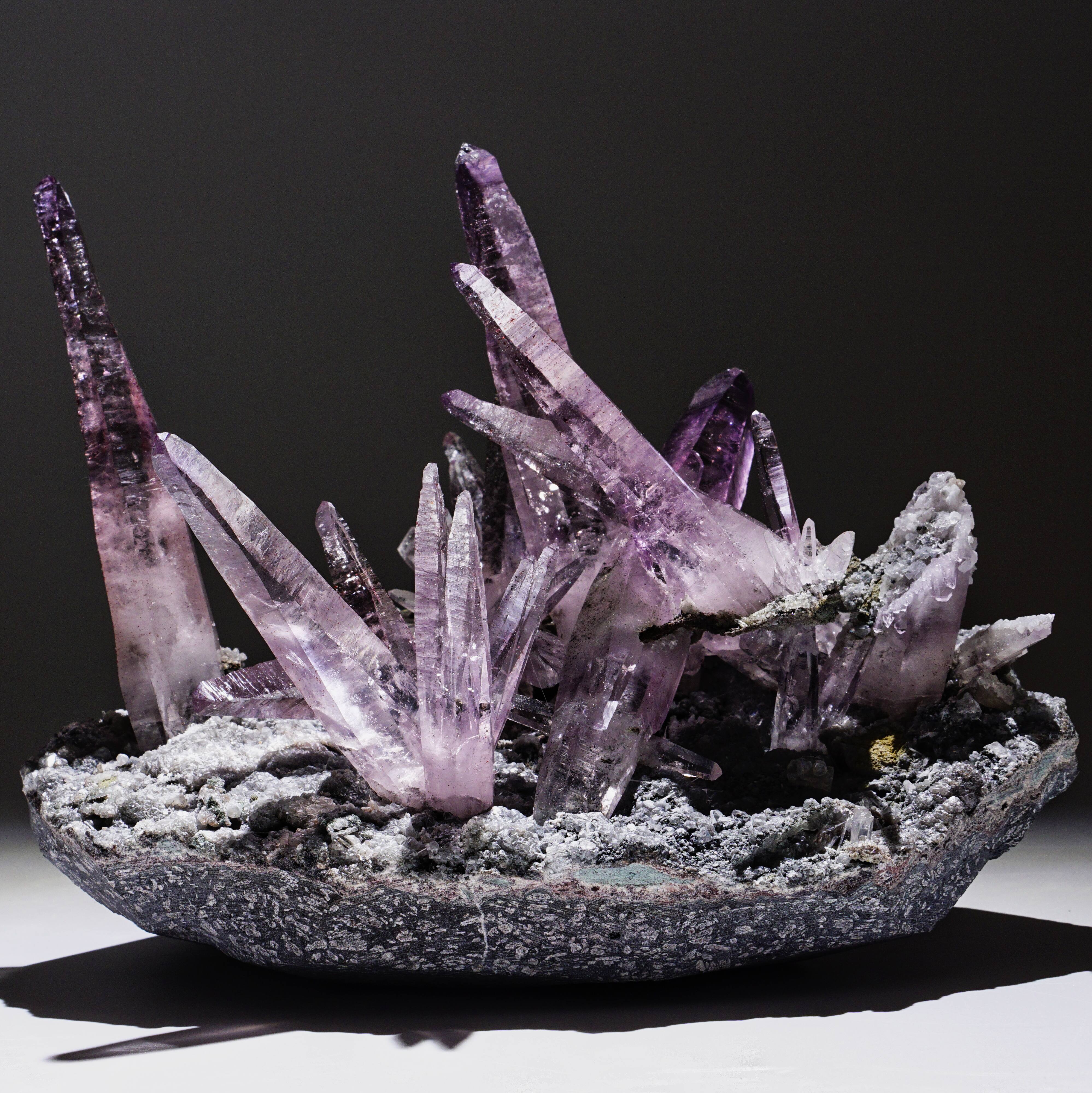
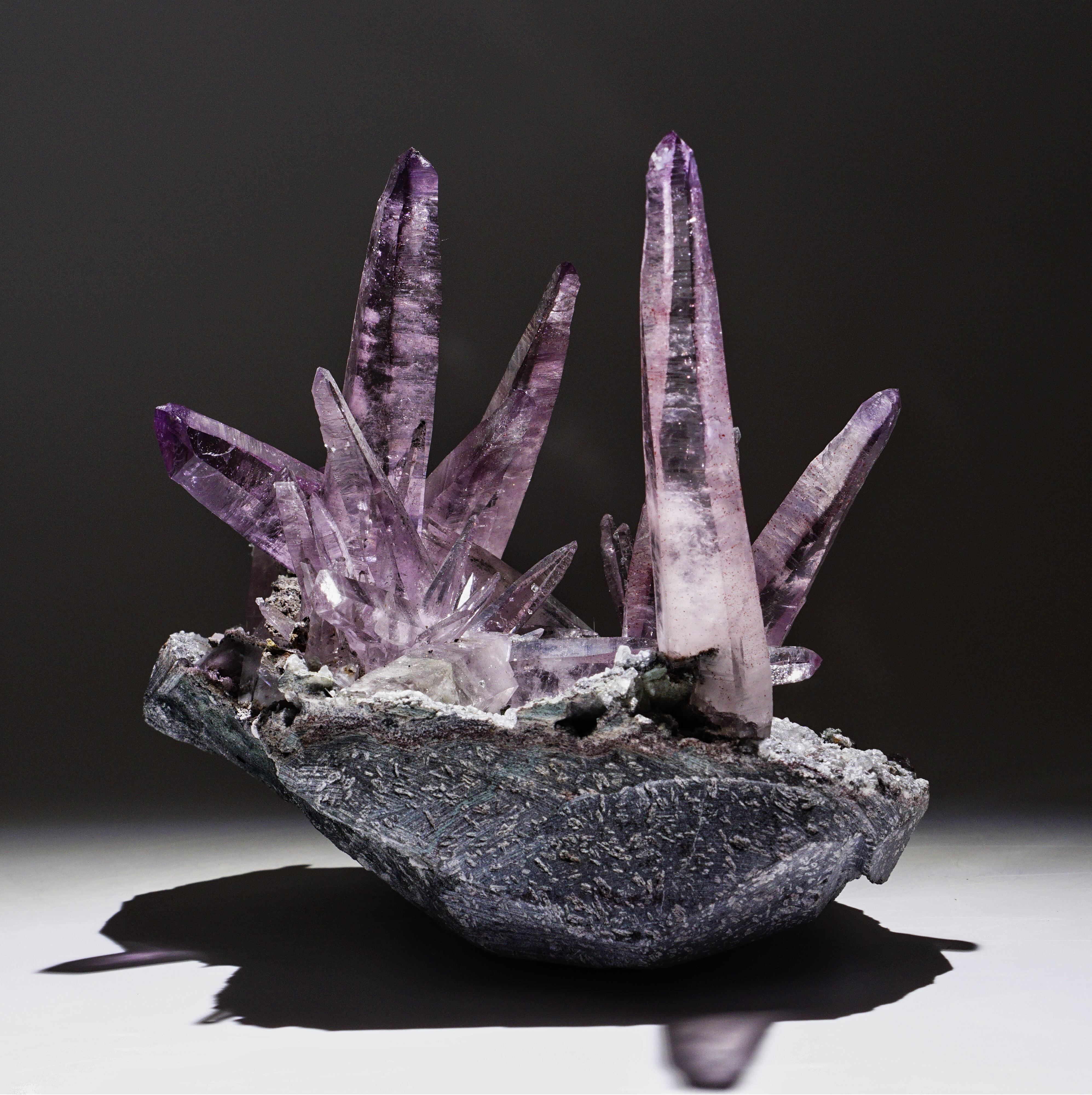
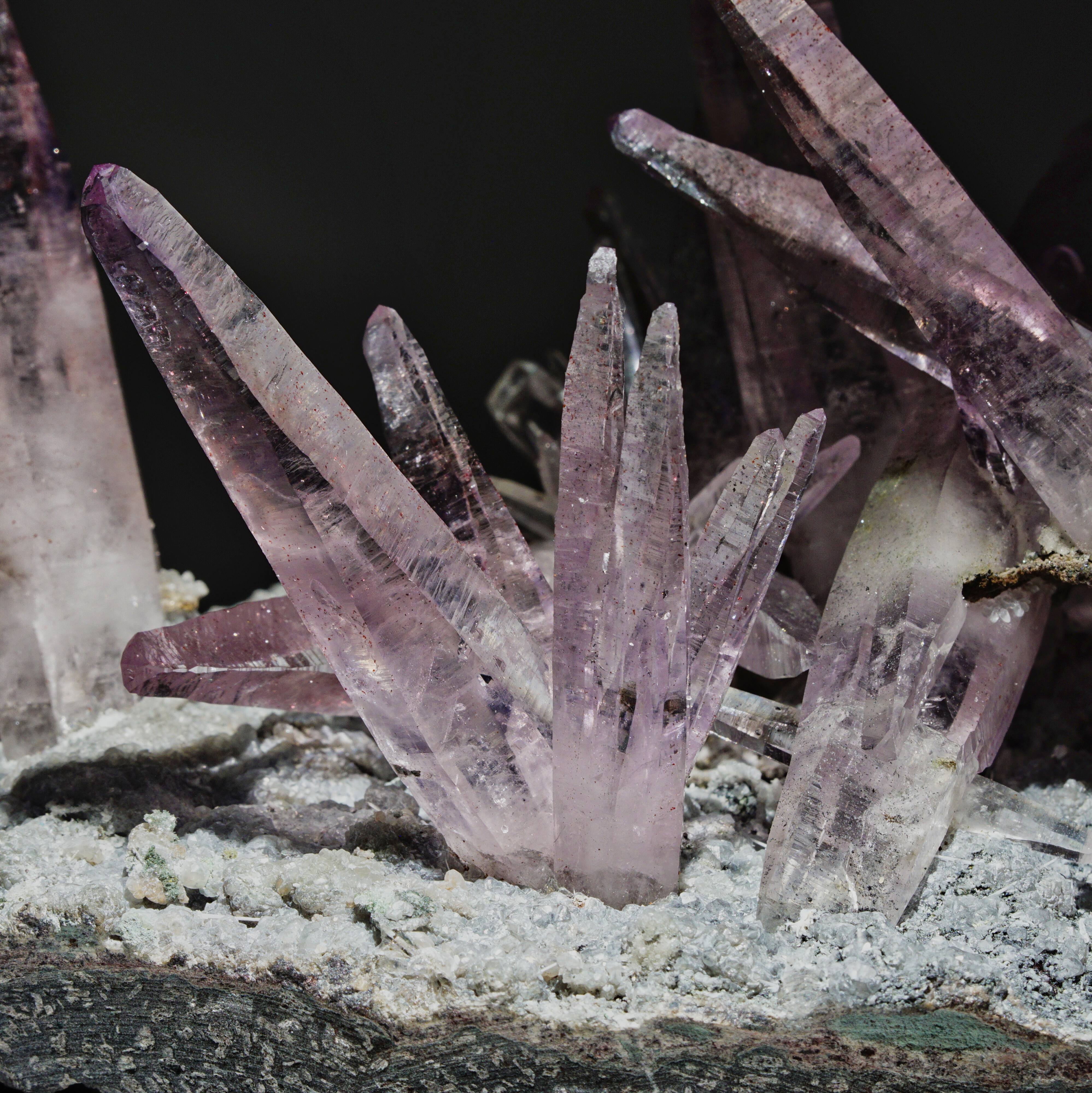
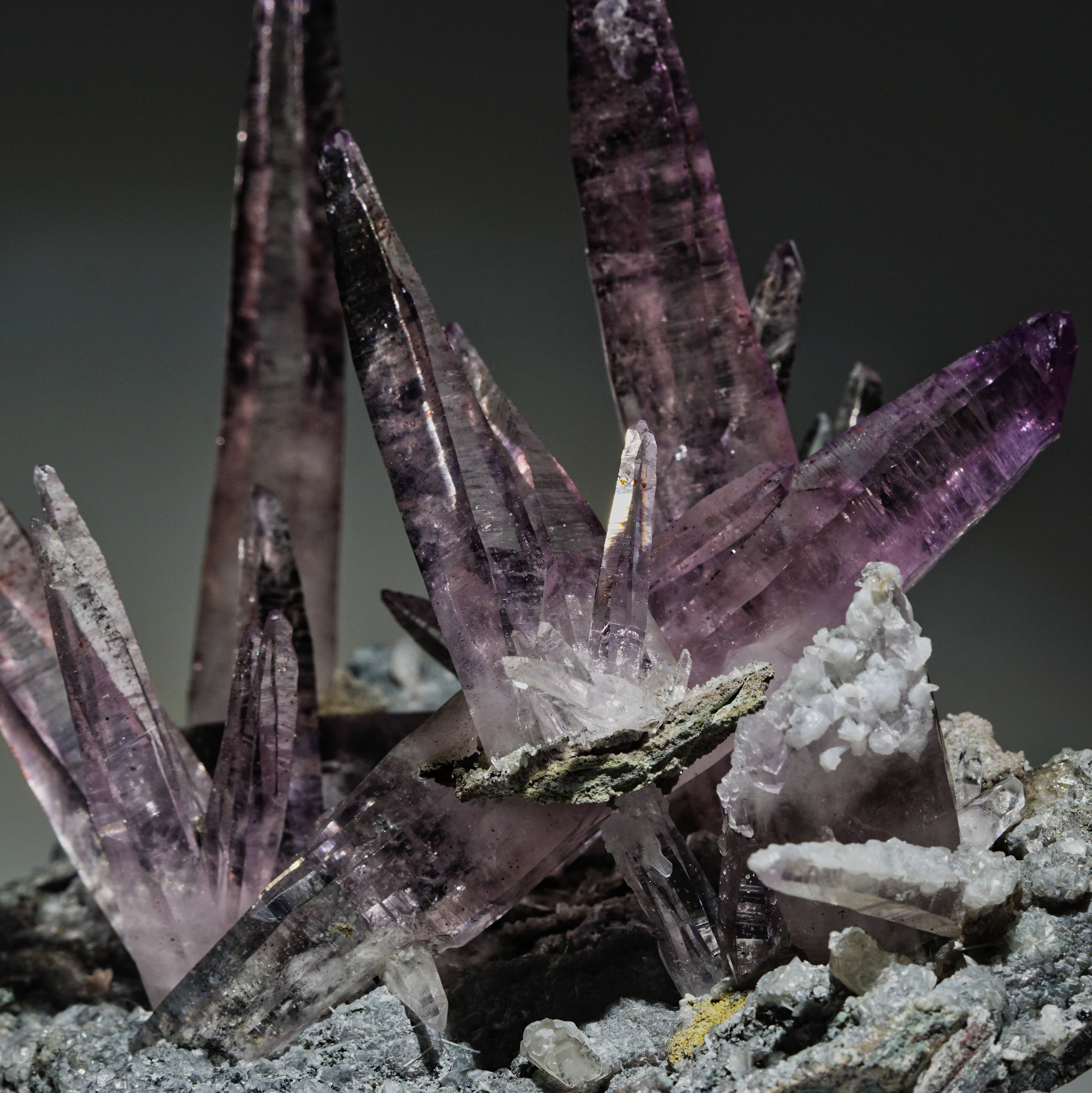
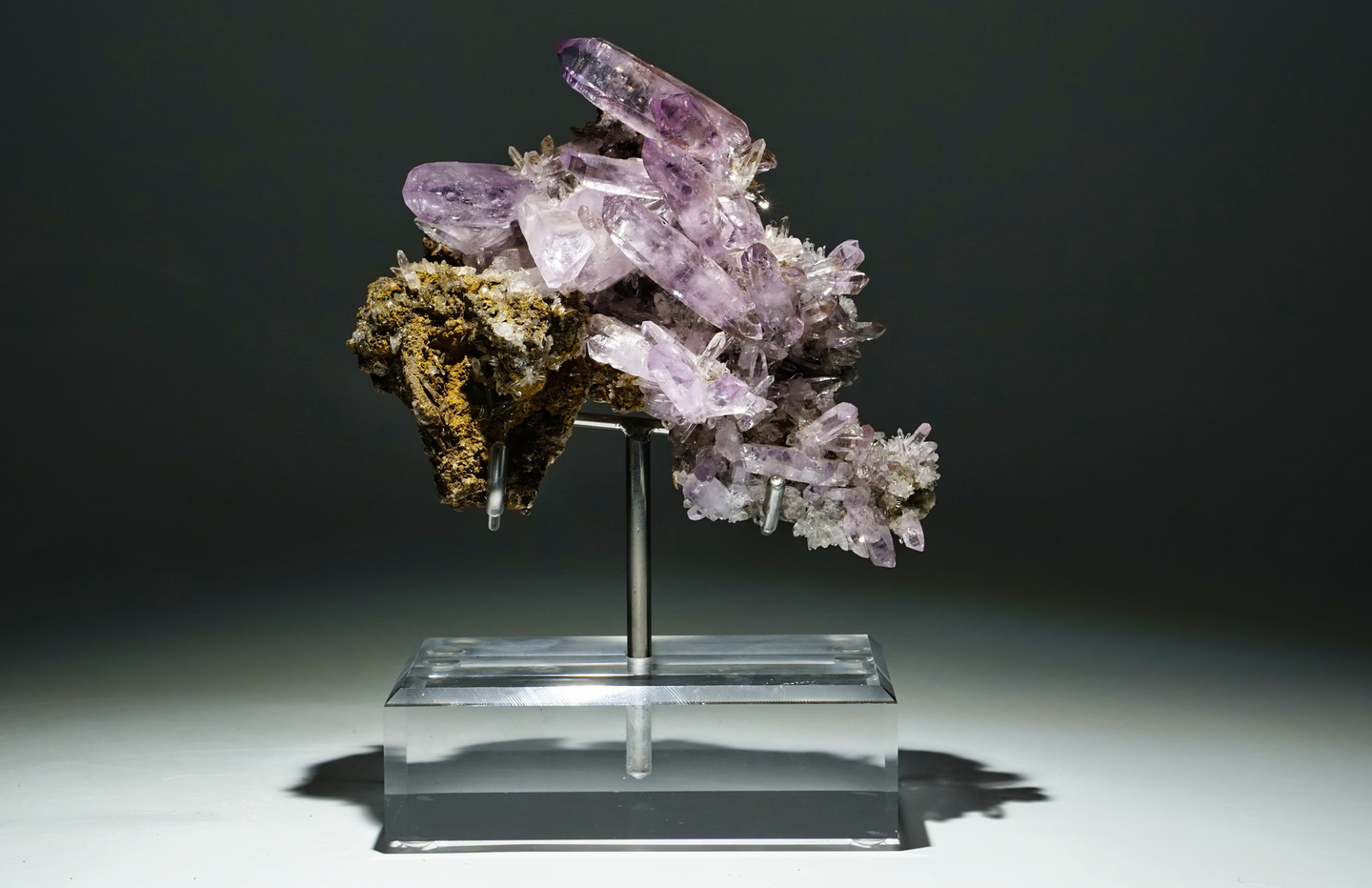
Veracruz Amethyst is known for its slender, elongated crystal habit, typically forming small, sharply defined points. Large, well-developed terminations are uncommon, making scale an important marker of quality.
In this specimen, multiple crystals rise vertically from a dense matrix, forming tall, column-like structures that feel architectural rather than decorative.
Selected for the Star Wars Collection, this amethyst expresses force through structure, where natural geometry evokes propulsion, scale, and an otherworldly sense of engineered terrain.
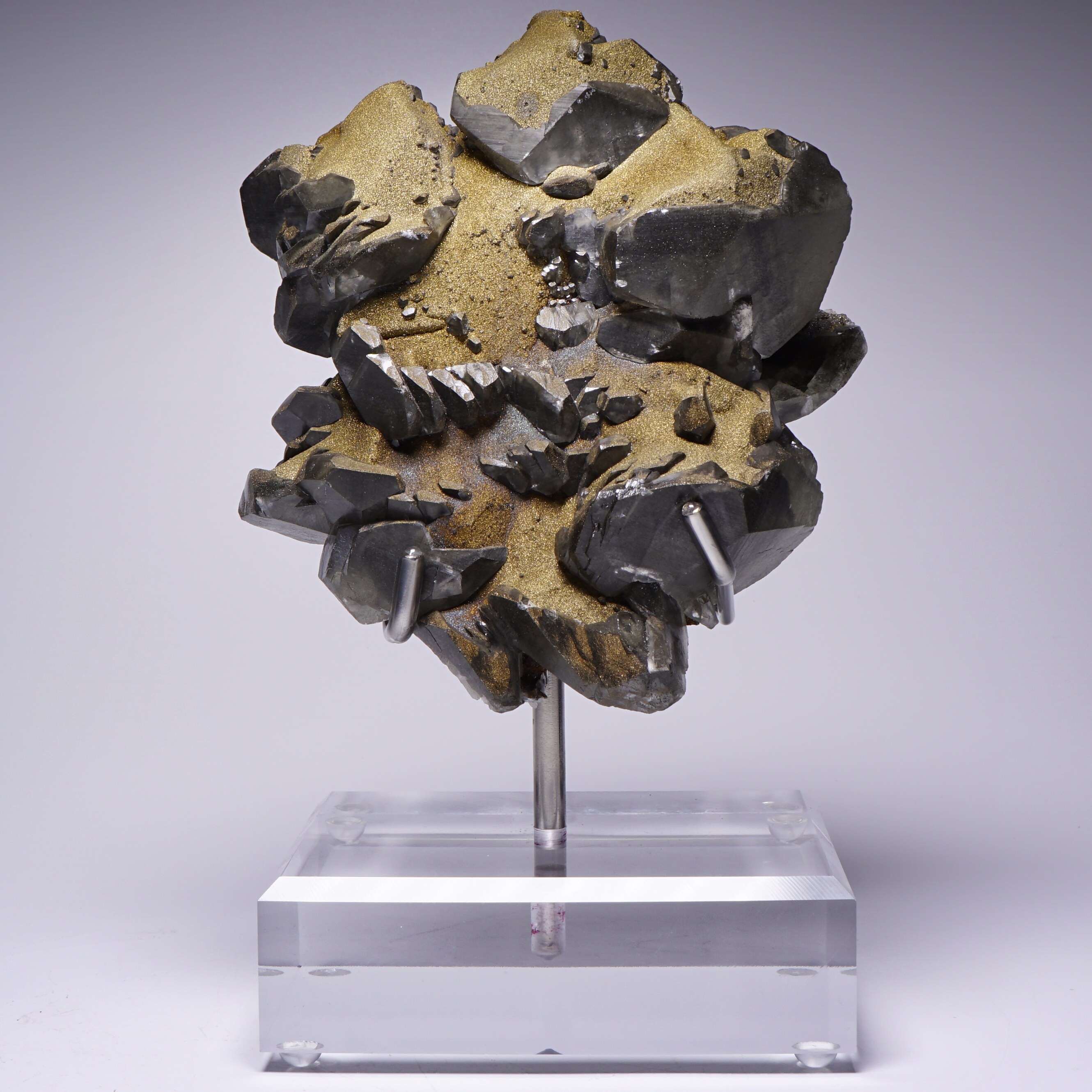
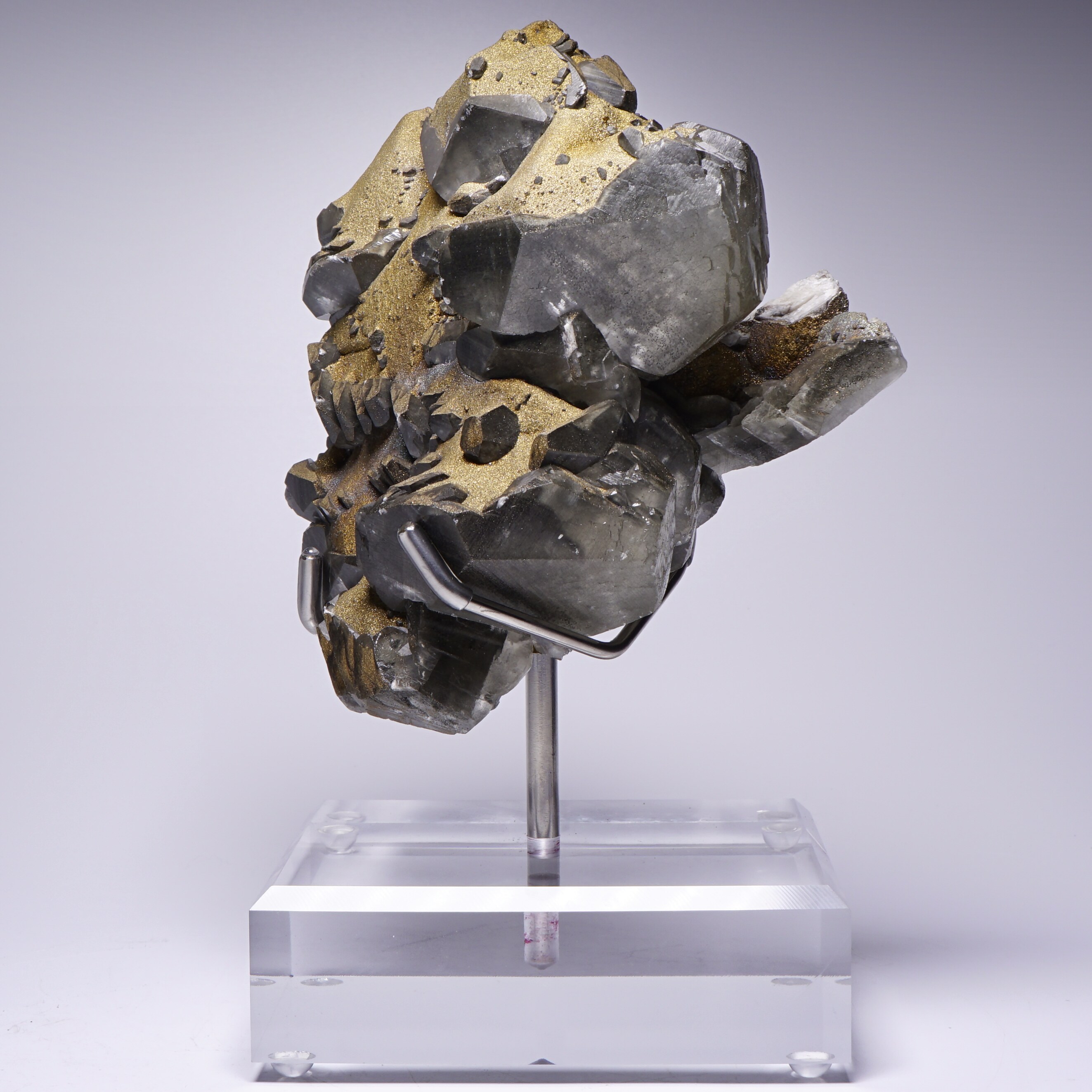
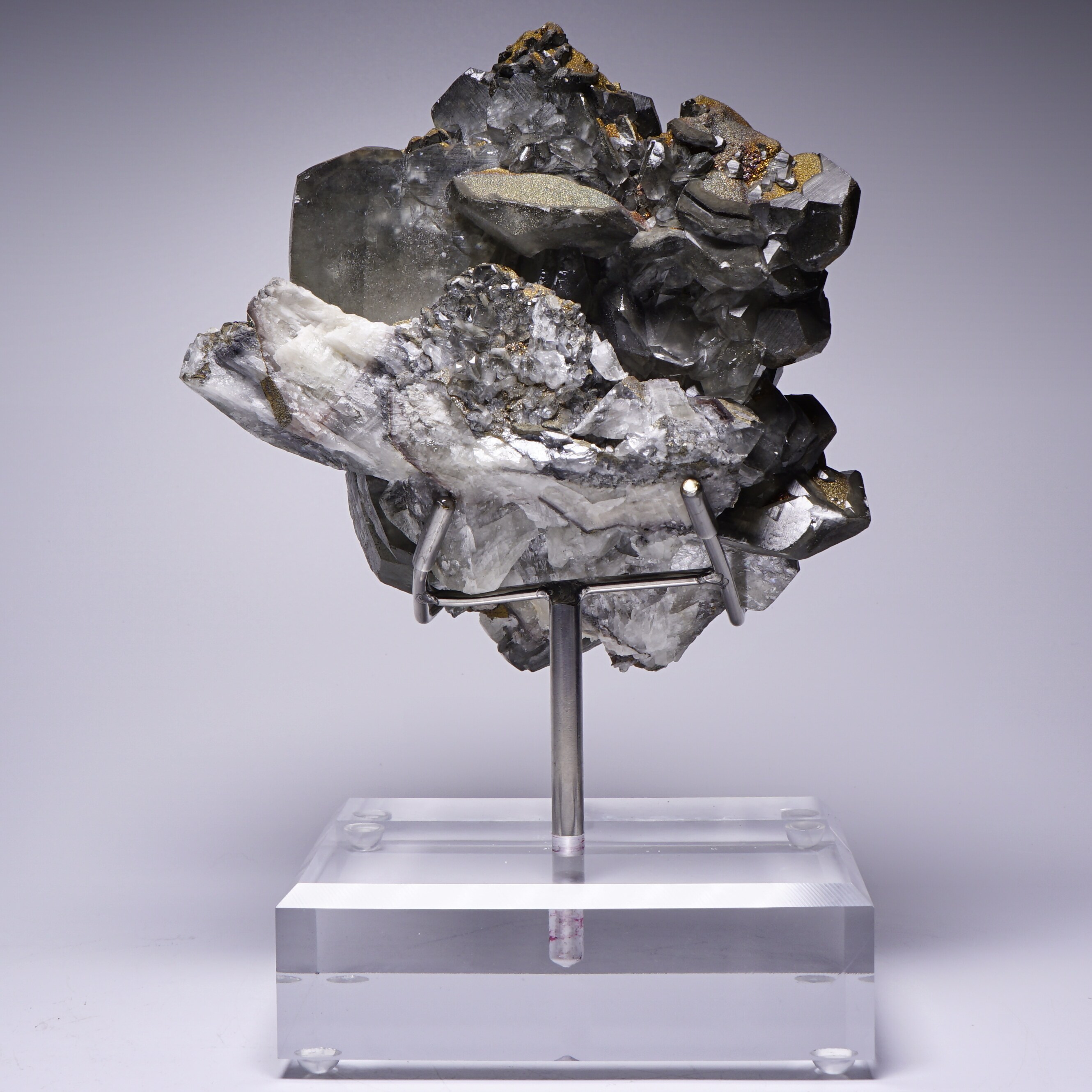
This specimen combines scalenohedral calcite with a partial overgrowth of chalcopyrite, creating a surface defined by hard metallic facets set against a granular mineral base. The chalcopyrite forms dense, angular plates that appear protective rather than decorative.
In this piece, the metallic growth wraps the calcite like armor, reinforcing edges and protrusions with weight and presence. Light reflects sharply off the chalcopyrite surfaces, emphasizing solidity, durability, and controlled strength. What distinguishes this crystal is its sense of defense and reliability.
Selected for the Star Wars Collection, this piece evokes the armor of a space warrior: resilient, grounded, and built to endure force rather than evade it.
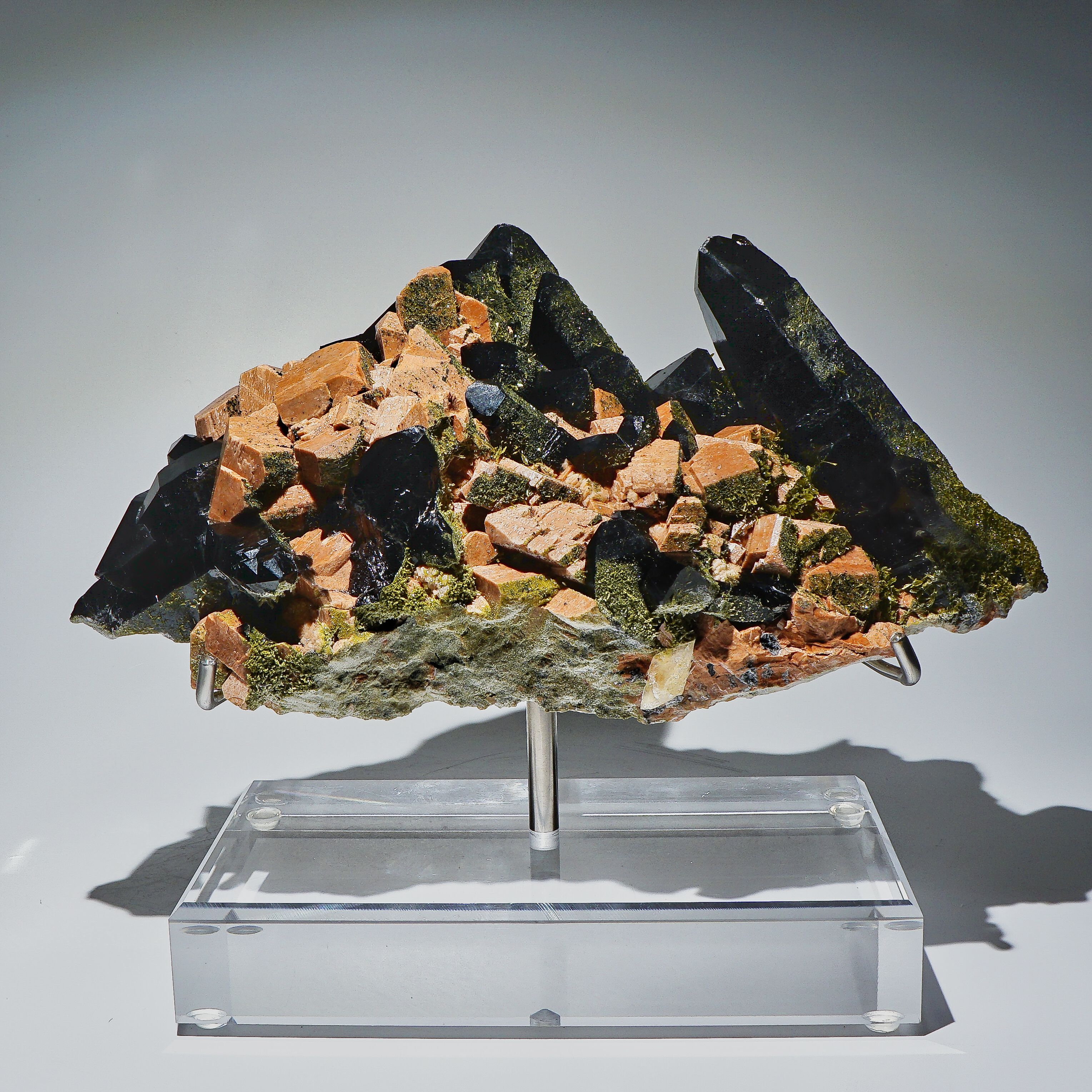
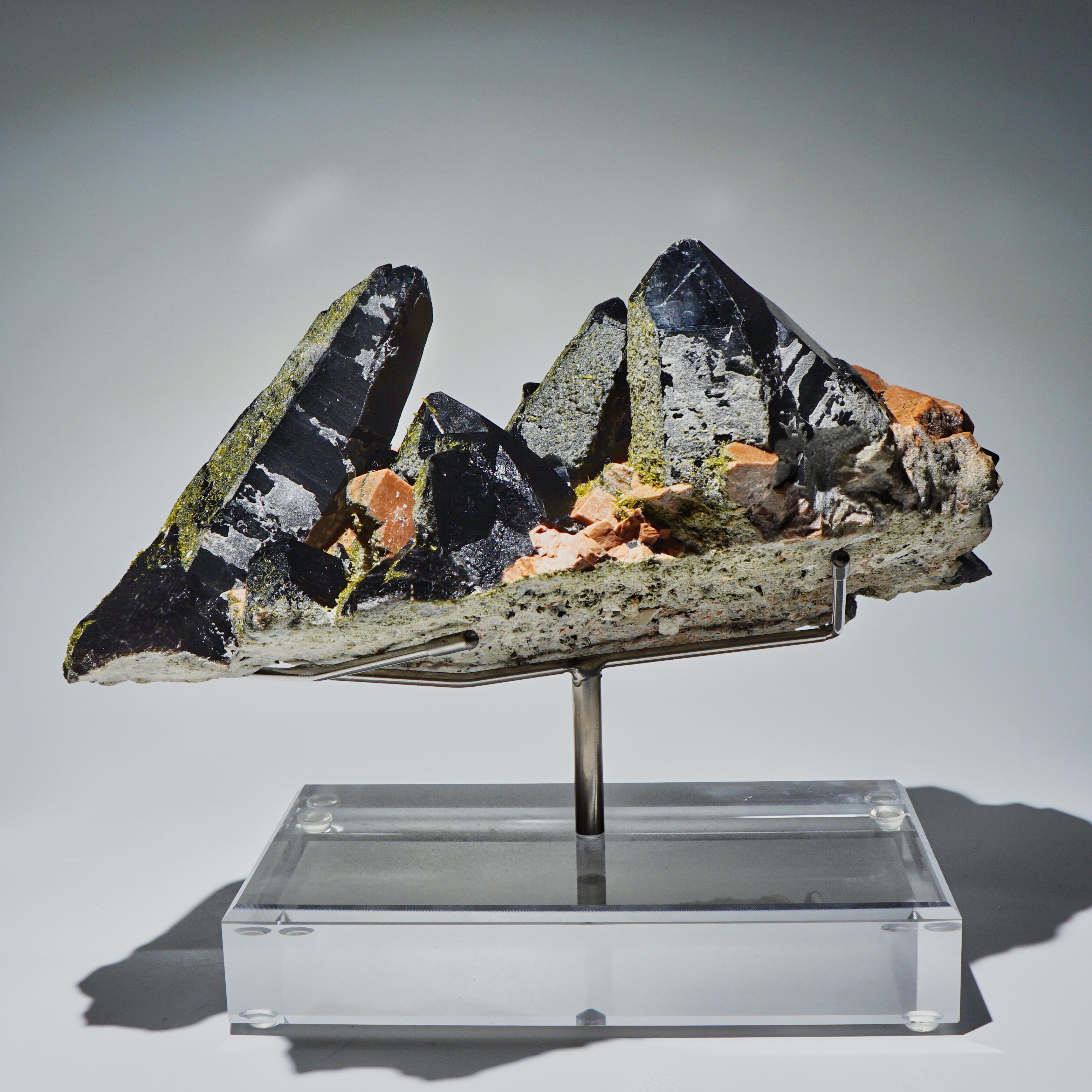
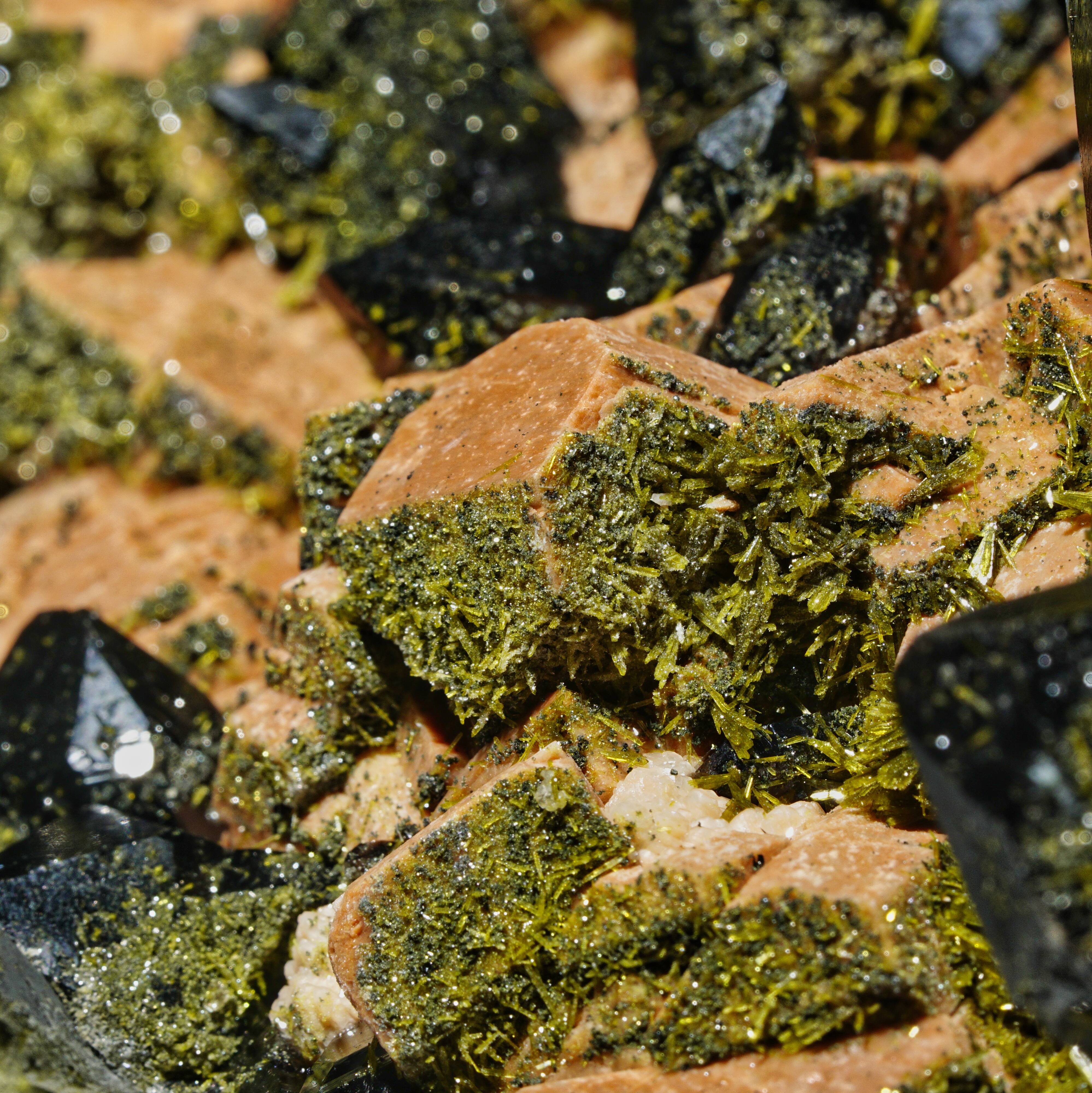
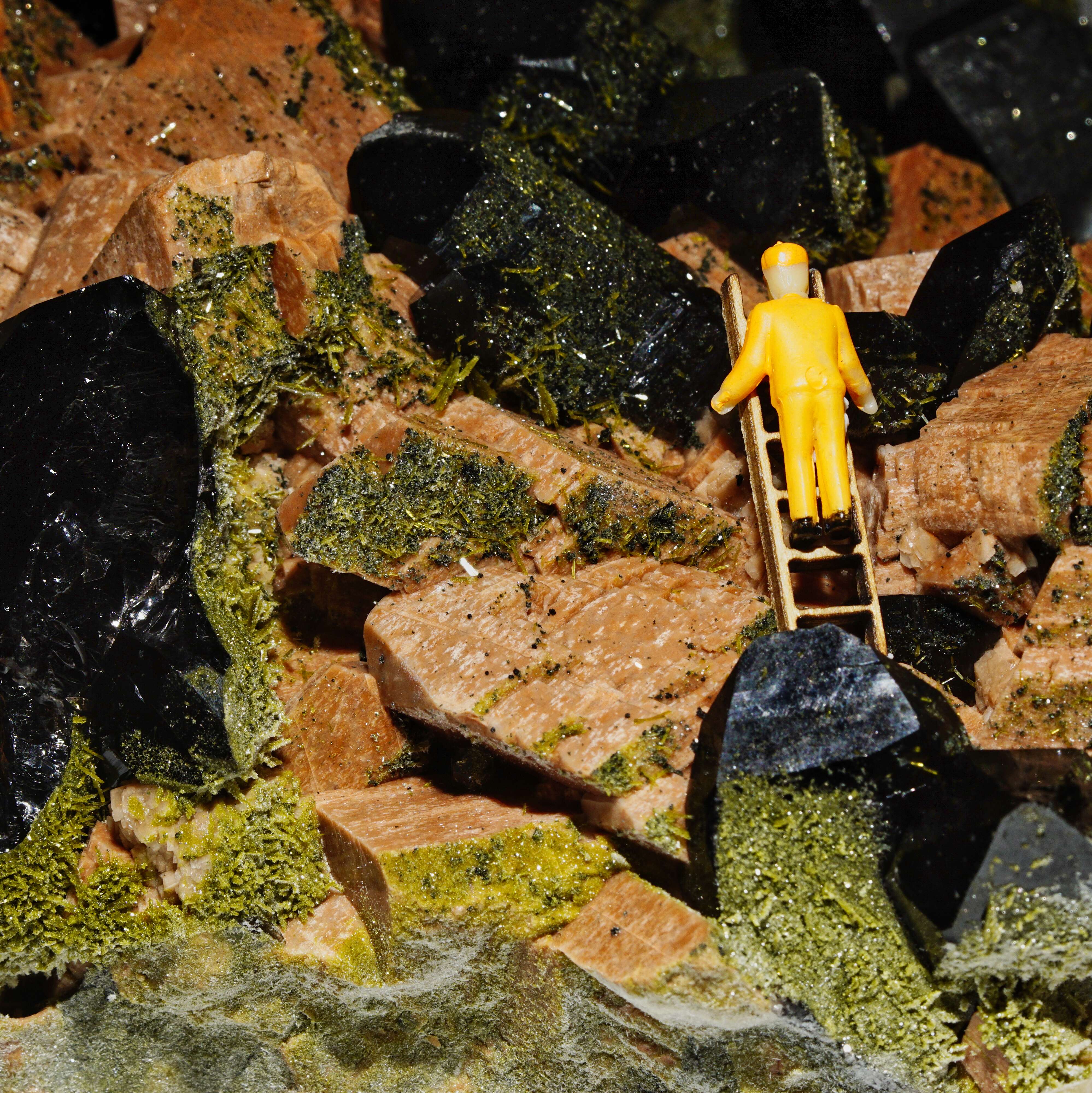
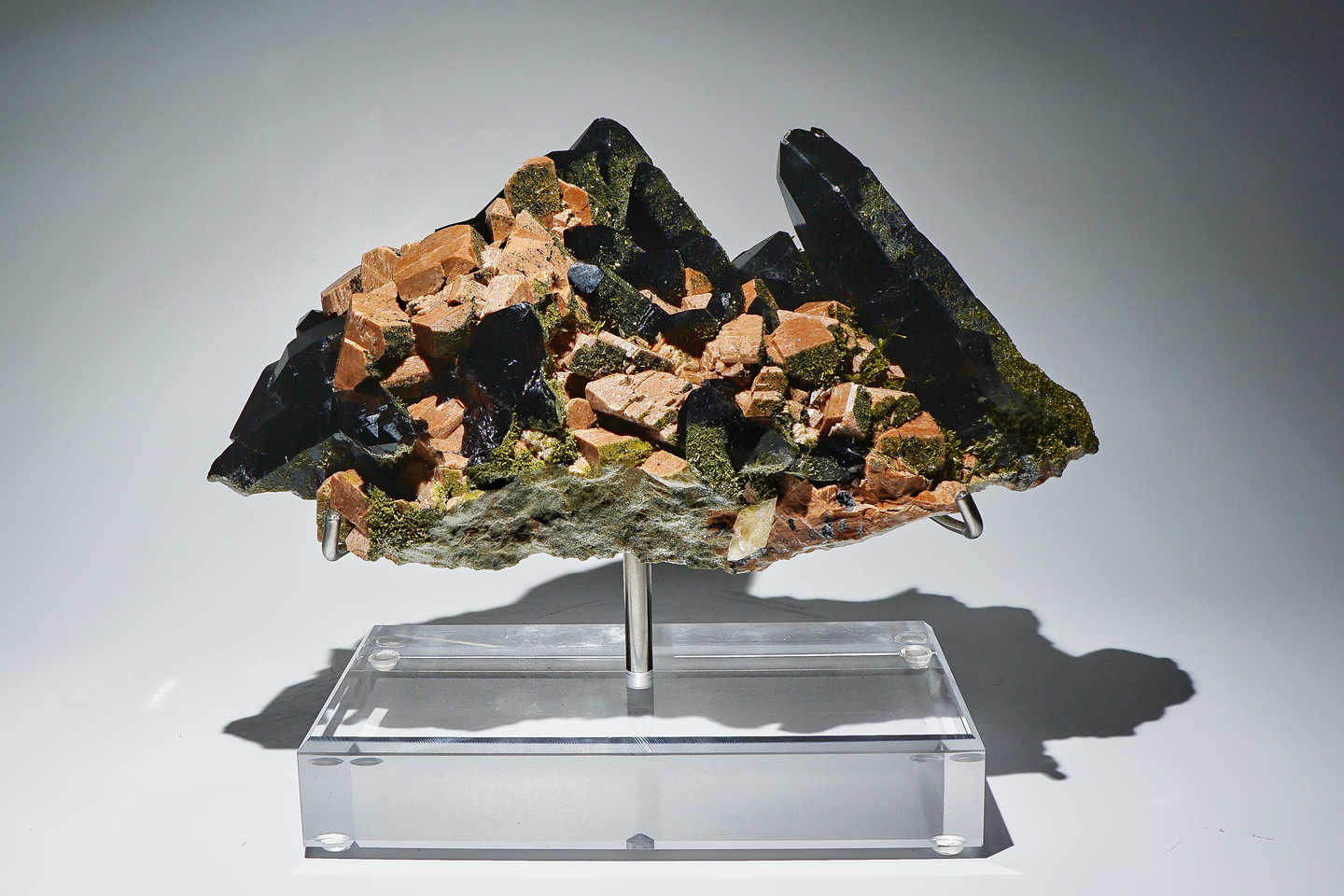
Black Marion from Shandong is distinguished by large, sharply defined terminations and a deep, opaque coloration. The crystals commonly coexist with epidote and feldspar, creating strong contrast between dark quartz faces and granular, mineral-rich matrix.
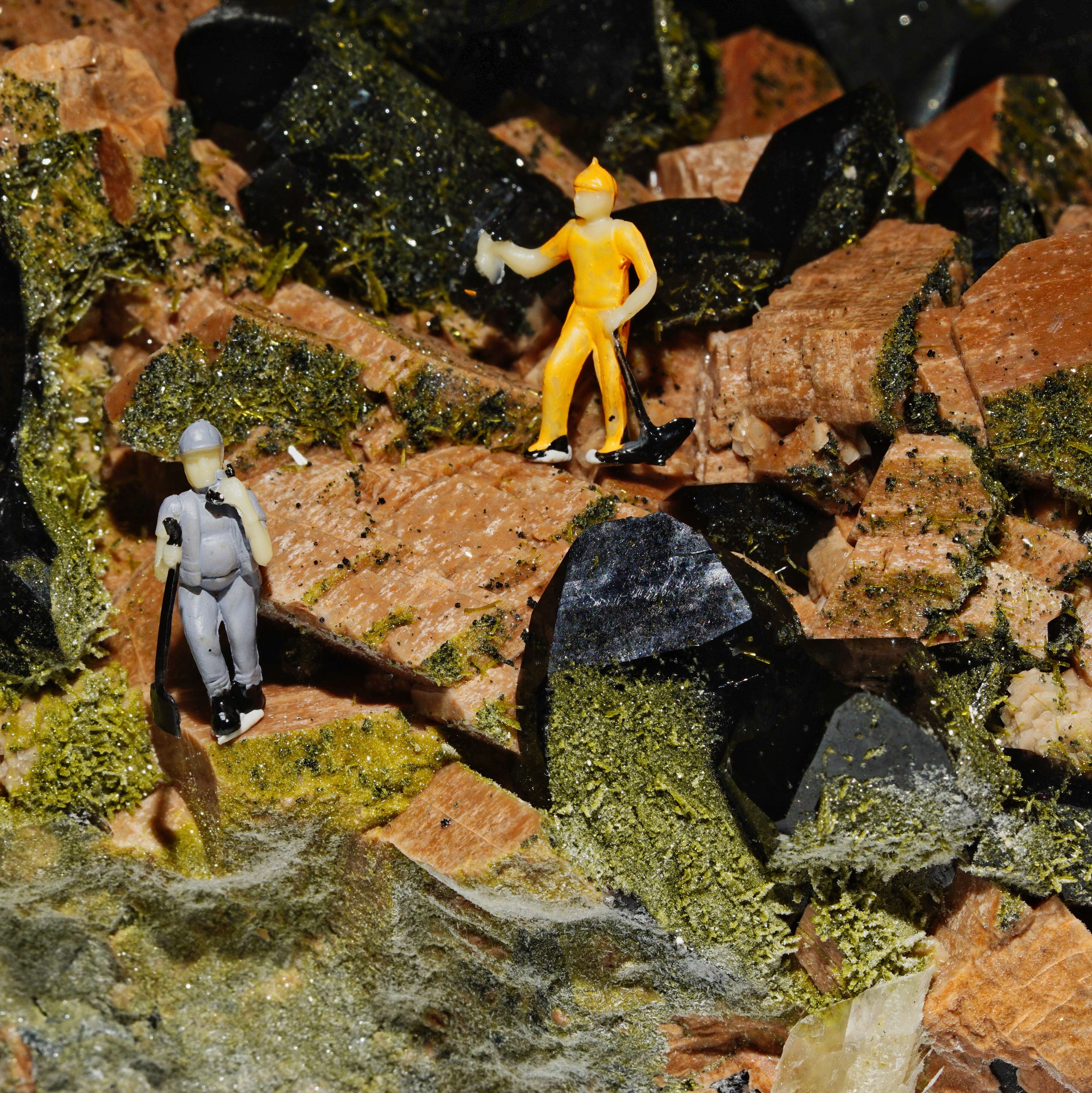
In this specimen, angular black terminations rise from a rugged base, forming a silhouette reminiscent of an alien planetary surface. The structure reads as geological terrain rather than ornament — peaks, ridges, and dense mineral fields compressed into a single mass.
Selected for the Star Wars Collection, this Black Marion evokes an extraterrestrial world — raw, powerful, and shaped by forces far beyond the familiar.